
By Nina Ostrowski
—
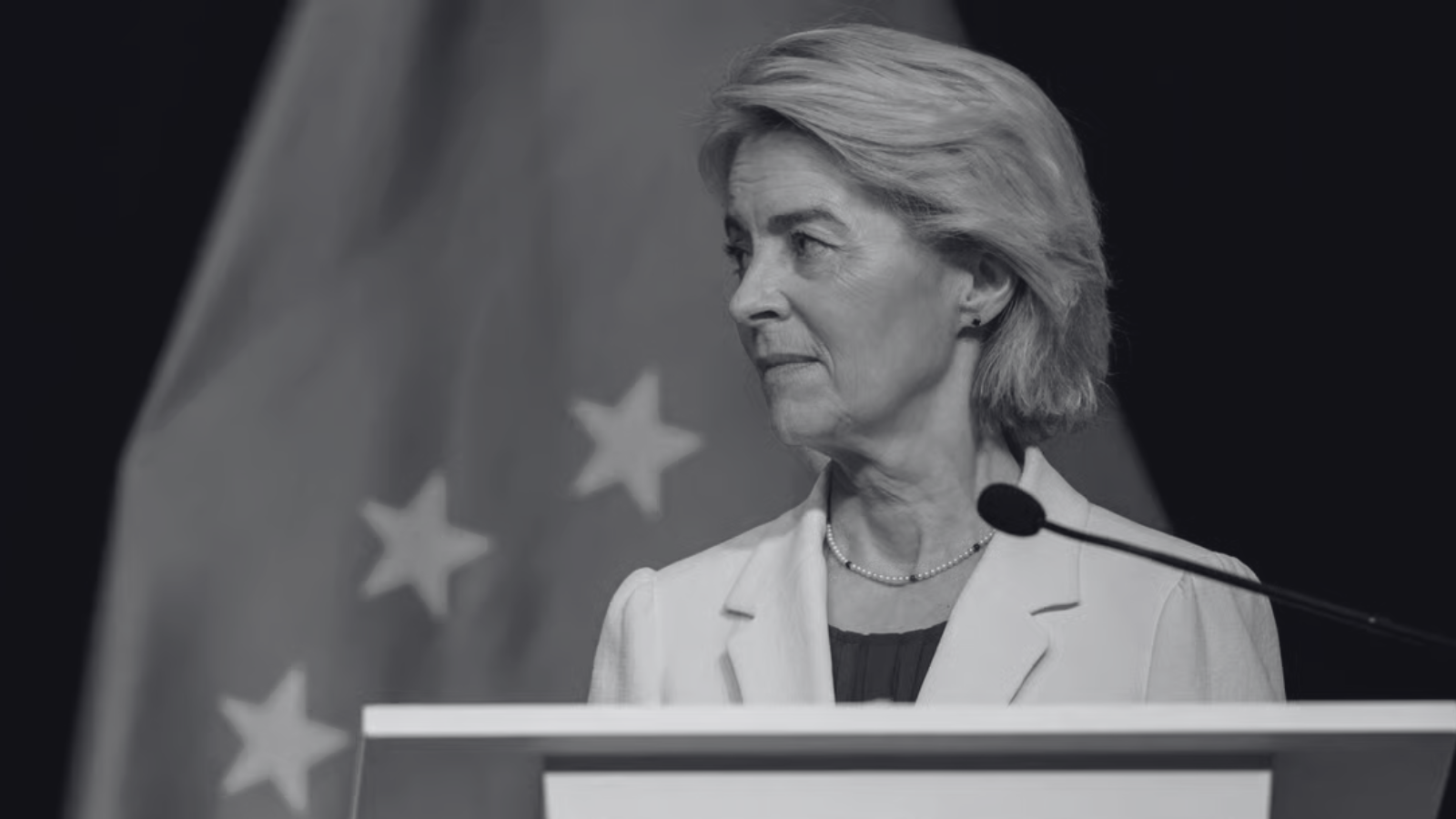
Ten years after Paris promised to keep warming below 1.5°C, COP30 in Belém has ended without the words “fossil fuels” appearing once in its final text. But even as COP30 was underway, one moment laid bare why we failed: European Commission President Ursula von der Leyen stood at the G20 in South Africa and declared, “We are not fighting fossil fuels, we are fighting the emissions from fossil fuels.”
Read that again. The leader of what claims to be the world’s most ambitious climate bloc told us that oil and gas aren’t the problem, only what comes out of them. It’s like saying tobacco isn’t dangerous, just the smoke.
Meanwhile, outside the negotiating halls, indigenous activists literally had to force their way through the gates just to access the talks, while fossil fuel executives were being ushered inside with badges and invitations. If ever there was a snapshot of who holds power in these spaces, this was it.
For Fossil Free Politics (FFP), COP30 was both vindication and wake-up call. Our years of tracking fossil fuel lobbyists and coordinating pressure across Europe proved what we’ve always known: you cannot solve a crisis with the people who are causing it in the room.
Tracking the polluters
This year, the Kick Big Polluters Out (KBPO) coalition revealed a record presence of fossil fuel lobbyists at COP30: 1,600 in total, meaning one in every 25 participants, the highest proportion in the history of the climate talks. Through the tracking effort led by KBPO, with support from groups including Fossil Free Politics, the coalition found that these lobbyists received two-thirds more passes than all delegates from the ten most climate-vulnerable nations combined.
According to Nathan Stewart, coordinator of Fossil Free Politics, the findings underline a deeply troubling trend: the overwhelming presence of industry representatives “shows more clearly than ever that we need fossil-free politics, climate action led by people, not by the polluters who created this crisis.”
The numbers reveal corporate capture: France brought 22 fossil fuel lobbyists, including TotalEnergies CEO Patrick Pouyanné. Sweden brought 18. Italy brought 12. These weren’t observers, they had government badges giving them behind-the-scenes access to negotiations.
KBPO’s lobby count methodology has become the gold standard for exposing corporate interference, with media worldwide citing the figures. But more importantly, we can now use this data to hold governments accountable.
The national letters campaign: turning pressure into policy
FFP’s strength comes from coordinated national groups running sustained, aligned campaigns. Throughout 2025, we pressed EU Climate Commissioner Wopke Hoekstra and national governments to act. Our open letter, signed by more than 100 organizations, urged the European Commission to exclude fossil fuel lobbyists from its COP delegation, push member states to follow suit, and support an Accountability Framework at the UNFCCC.
These efforts delivered concrete results. Commissioner Hoekstra kept his word, and for the second year in a row the European Commission brought zero fossil fuel lobbyists to COP30. As Chiara Martinelli, Director at CAN Europe, noted, this matters: “You cannot solve a problem by giving more power to those who caused it, and it’s encouraging that, after sustained pressure from the Fossil Free Politics campaign, the Commission once again kept lobbyists out of its delegation.”
National FFP groups secured concrete commitments: Germany and Austria committed not to bring fossil fuel lobbyists. These precedents prove change is possible when we organize.
KBPO also helped secure new accountability measures on the UNFCCC level. For the first time, COP30 required non-government participants to disclose funding sources and confirm alignment with UNFCCC objectives.
The reality behind EU “leadership”
But the research into the presence of lobbyists highlighted an uncomfortable truth: although the Commission itself did not include any fossil fuel lobbyists in its official delegation, nine EU member states brought a total of 84 fossil fuel lobbyists to COP30. As Kim Claes from Friends of the Earth Europe noted, this influx from within the EU “flooded COP30 with fossil fuel lobbyists and further undermined the Union’s credibility as a self-declared climate leader, credibility that was already in question as it arrived with flimsy 2040 climate targets.”
This is what the annual Kick Big Polluters Out research forces into public view. The EU claims leadership while member states give TotalEnergies and Equinor executives preferential access to shape policy. As an ActionAid Ireland representative told RTE Radio during COP30, journalists were regurgitating EU talking points without questioning the reality: the EU’s communications machine was pushing an ambitious narrative while member states contradicted it by flooding talks with industry lobbyists.
Von der Leyen’s comment crystallized the charade. The EU isn’t trying to end fossil fuels, it’s trying to make them “clean” through carbon capture fantasies that allow extraction to continue. When she said “we’re not fighting fossil fuels,” she revealed the EU’s true priority: protecting European oil and gas interests while maintaining the veneer of climate leadership.
This matters because her statement came right when European ministers supposedly pushed for a fossil fuel roadmap in Belém. Overnight, 14 EU member states joined 22 other countries threatening to collapse talks over absent fossil fuel language. Their letter stated: “We cannot support an outcome that does not include a roadmap for implementing a just, orderly, and equitable transition away from fossil fuels.”
But von der Leyen had already undercut their position. If the Commission President says we’re not fighting fossil fuels, why believe EU negotiators demanding phaseout?
The deeper problem FFP is fighting
Our work wasn’t just counting lobbyists. It was exposing the system allowing them there.
Here’s what the KBPO research revealed: approximately 599 lobbyists gained access through Party overflow badges giving behind-the-scenes negotiation access. These badges aren’t covered by new transparency requirements. So while non-government participants must disclose funding, governments still sneak polluter representatives in through the back door.
France gave government badges to five TotalEnergies representatives. Norway brought six Equinor executives on its official delegation. These lobbyists then go on to shape the texts and water down commitments.
As Pascoe Sabido from Corporate Europe Observatory warns, this pattern is no accident. “Until we Kick Big Polluters Out, the outcomes of COP30 , and every COP after, will continue to be written by the world’s largest polluters, prioritizing profit over people and the planet.”
Over 7,000 fossil fuel lobbyists have attended UN climate talks in 20 years. Every agreement gets weaker, every deadline pushed, every commitment filled with loopholes. Von der Leyen’s comment wasn’t radical, it made explicit what polluters have achieved behind closed doors for decades.
What FFP will do next
COP30 showed that real climate action won’t come from UN negotiations as long as polluters control access, but it also revealed growing momentum. More than 80 countries now back a fossil fuel phaseout roadmap, and Colombia and the Netherlands will host a phaseout conference in April 2026.
FFP’s next steps are clear:
- Keep tracking and exposing: Working with international partners in the KBPO coalition, FFP will continue revealing the scale of fossil fuel lobbying at climate talks and forcing media and governments to confront corporate capture.
- Apply coordinated pressure: The Commission’s clean delegations were the result of synchronized action across Europe. FFP will replicate this model with new targets at both EU and national levels.
- Advance the legal case: KBPO is developing an Accountability Framework modeled on the WHO tobacco convention to protect climate policy from fossil fuel interference.
- Push for EU-wide rules: FFP will demand binding conflict-of-interest policies for all government representatives at climate negotiations, not just the Commission.
The year ahead
Von der Leyen’s statement “we are not fighting fossil fuels” should haunt every 2026 climate conversation. It reveals the fundamental barrier: governments claiming leadership while protecting the industries causing the crisis.
FFP proved sustained pressure works. Our coordinated campaign successfully ensured the European Commission excluded all fossil fuel lobbyists from its official delegation for two consecutive COPs, COP29 in 2024 and COP30 in 2025. In 6 different EU member states national FFP groups have sent a letter to their governments to not bring in fossil fuel lobbyists. We got Germany and Austria to commit to it ahead of the COP and 18 EU governments not bringing in lobbyists.
KBPO forced transparency measures. We helped make “1,600 fossil fuel lobbyists” a global headline and expose the EU’s responsibility in giving access to lobbyists.
Working with CAN Europe, we launched the Civil Society Pledge for Fossil Free Politics, signed by 98 organizations committing to protect policymaking from fossil fuel capture. The collaboration went beyond signatures: CAN Europe members distributed a thousand FFP stickers reading “I’m not a fossil fuel lobbyist” throughout COP30, making our message visible inside the conference venue and sparking countless conversations about corporate interference. In photos and videos from COP30, the bright yellow stickers kept standing out in the background attached to people walking by as a visual reminder of the campaign’s reach and impact.
Yet this is only the first step toward our ultimate goal: removing all polluters from climate negotiations and transforming voluntary roadmaps into binding commitments.
Ten years after COP21 in Paris, we’re running out of time for voluntary commitments. The question isn’t whether we can afford to kick big polluters out of climate policy. It’s whether we can afford not to.
The European Commission’s exclusion of all fossil fuel lobbyists from its delegations proves change is possible. Now we must set standards for all governments. FFP will keep fighting, tracking every lobbyist, challenging every commissioner, exposing every member state prioritising polluter profits over planetary survival.
We urgently need a firewall around UN and EU climate decision-making to keep vested interests like TotalEnergies and other polluters out. Just as tobacco lobbyists are barred from shaping public health policy, this firewall must shield our democratic institutions from fossil fuel industry interference, no more private lobby meetings, no seats on expert bodies, and no roles on government delegations.
The stakes are too high, and the time for half-measures is over. Now we need governments and decision-makers, at every level, to commit to fossil-free politics and put people and the planet ahead of polluters’ profits.